Routes
Uyuni to San Pedro de Atacama: crossing at the end of the 3-day tour
· 6 min read
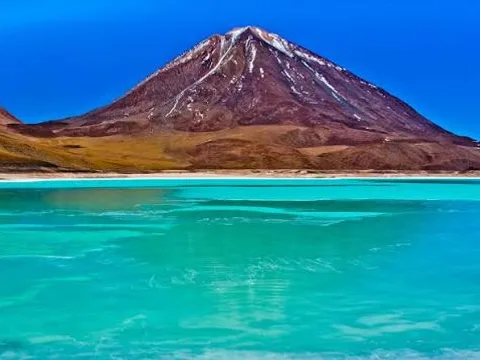
The three-day circuit ends deep in the Eduardo Avaroa reserve, closer to Chile than to Uyuni. That geography is the whole reason the crossing exists: on the last morning you either drive eight hours back the way you came, or you carry on twenty minutes to the border and are in San Pedro de Atacama by lunchtime.
How the transfer actually works
- Tell us when you book. The driver plans the third morning around it, and travellers returning to Uyuni are not made to wait.
- You are dropped at the Hito Cajón post, at about 4,600 m, after the morning stop at Laguna Verde.
- Bolivian migration stamps you out there. Keep your passport accessible; it is a hut, not a terminal.
- A shuttle covers the last stretch to San Pedro — roughly 45 minutes and a 2,200-metre descent. The ticket costs about 120 BOB, paid on the spot, and is not included in the tour.
- Chilean entry formalities happen down the hill, at the control post outside San Pedro.
Keep 120 BOB in cash aside from day one. There is no cash machine anywhere on the circuit, and the shuttle does not take cards.
What Chilean customs will take off you
Chile runs one of the strictest agricultural controls on the continent, and the crossing from Bolivia is where it is enforced hardest. Fresh fruit, vegetables, meat, dairy, seeds, nuts and honey are all confiscated. So are coca leaves, which are legal and commonplace in Bolivia and are not legal in Chile — travellers who bought a bag for the altitude should finish it or leave it behind. Declaring what you carry costs nothing; being caught with it after saying no is a fine.
The altitude drop, and why it feels strange
You start the morning at 4,600 m and are at 2,400 m two hours later. Going down is not dangerous — the opposite — but three days of thin air, cold nights and broken sleep catch up with most people the moment they can breathe again. Plan a slow afternoon in San Pedro rather than a tour on arrival, drink water, and expect to sleep well for the first time in three days.
Doing it the other way round
The same route runs from San Pedro to Uyuni, and it is the better direction for one specific traveller: the one who wants the salt flat as the finale rather than the opening. It is the harder direction physically — you climb from 2,400 m to over 4,000 m on day one, with no acclimatisation — so it suits people who have already spent time in the Andes.
Frequently asked questions
- Does the crossing cost extra on top of the tour?
- The tour price is the same whether you return to Uyuni or leave at the border. The only extra is the shuttle from Hito Cajón to San Pedro de Atacama, around 120 BOB, paid in cash on the day.
- What happens to luggage left in Uyuni?
- If you are crossing into Chile, take everything with you on day one — nothing comes back to Uyuni afterwards. Travellers who are returning can leave a bag; those who are not should pack as though the vehicle is their only address for three days.
- Which nationalities need a visa for Chile?
- Most European, North American and South American passports enter Chile visa-free as tourists, but the rules change and they are not ours to guarantee. Check your own country’s current requirement with the Chilean authorities before you commit to leaving at the border rather than returning to Uyuni.