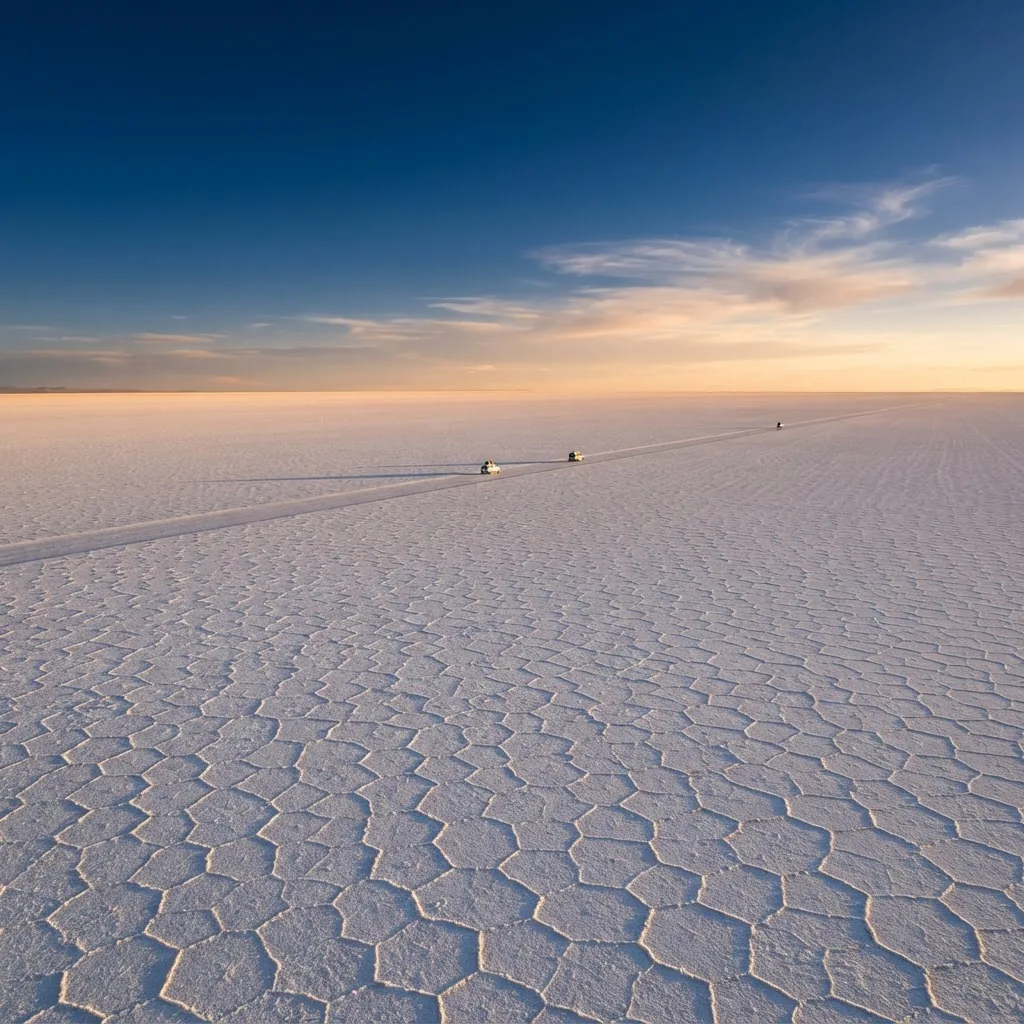
Uyuni Salt Flats
Bolivia’s great white salar and the coloured lagoons of the southwest — as a single full day, or a three-day expedition.
2 tours
3 days or 1 day
Start
Uyuni · 10:30
Group
Shared up to 6 or private max 4
Altitude
≈ 3,660 m
Choose your tour
Overview
One long, unhurried day on the world’s largest salt flat. You leave Uyuni at 10:30, spend the whole afternoon crossing the white, and come back after the sun goes down — usually between 18:00 and 19:00.
A typical Uyuni lunch and 4x4 Toyota transport are included throughout. Booking is entirely online: choose your date, pay securely by card, and your seat is confirmed straight away — nothing to arrange at an office before you leave.
Day-by-day itinerary
- Day1
Uyuni → Colchani → Salar → Incahuasi → sunset
Departure at 10:30, straight out onto the salt flat for the afternoon light, ending with sunset on the salar and the drive back to Uyuni.
- Train Cemetery
- Colchani — salt-processing museum
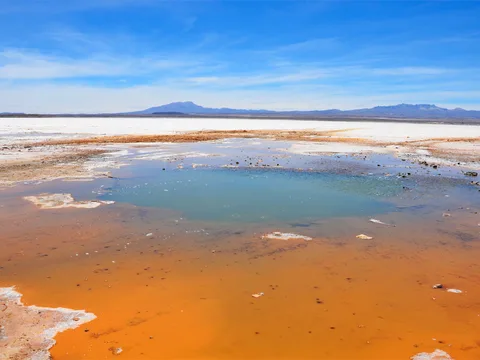
- Ojos de sal (the salt springs)
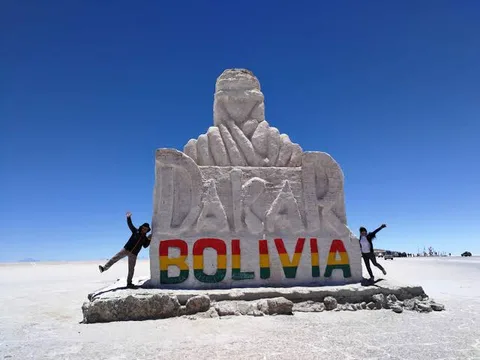
- Dakar Rally monument
- Salt hotel (Playa Blanca)
- The flags monument
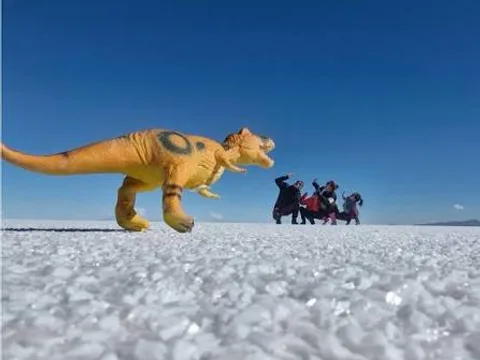
- Perspective photos out in the middle of the salar
- Creative photo & video session
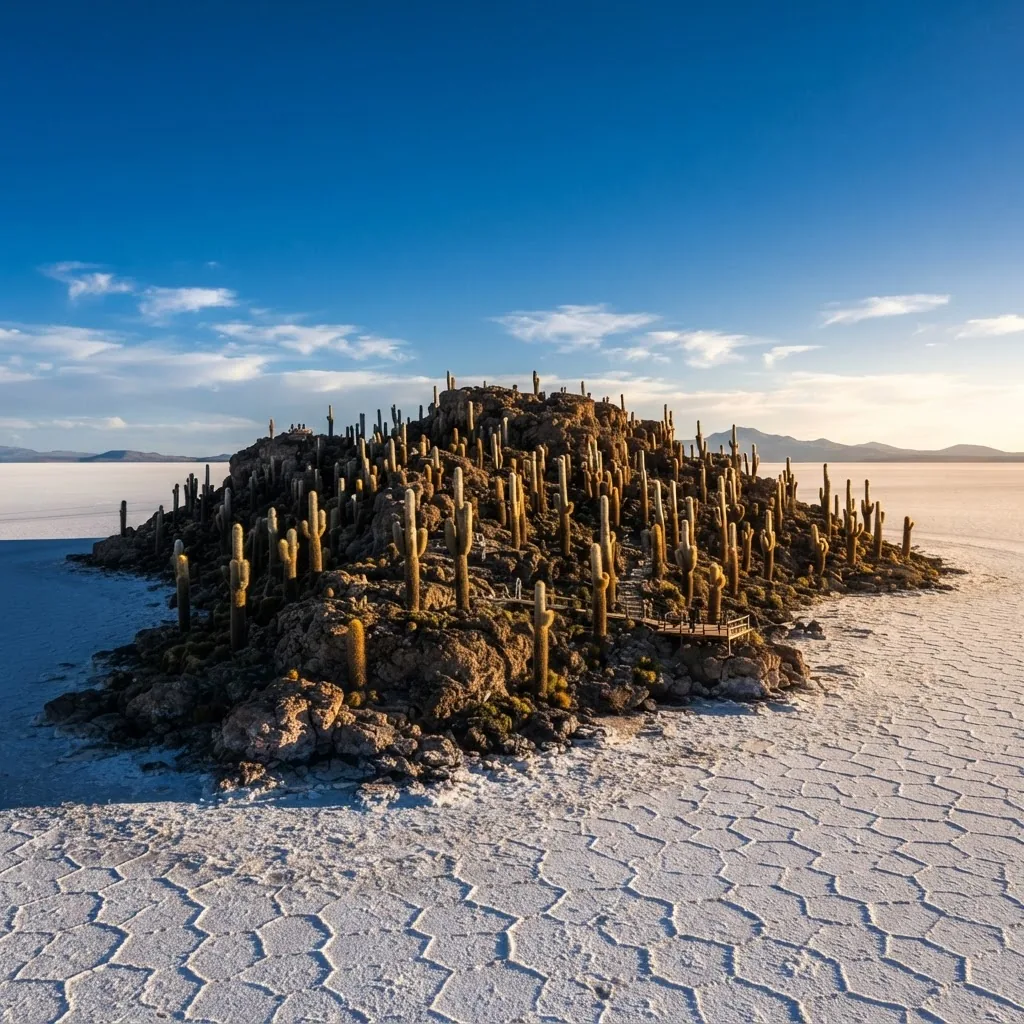
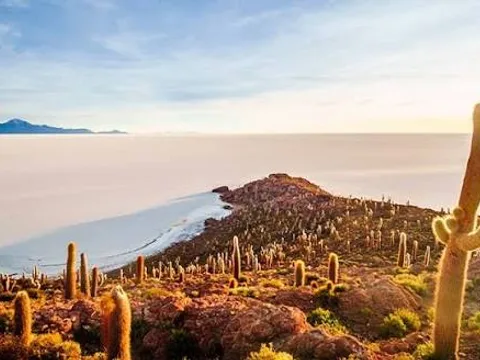
- Incahuasi Island (giant cacti)
- Sunset on the salar — back in Uyuni 18:00–19:00
Seasonal note: When the salar is flooded, Incahuasi Island cannot be reached and is replaced by more time on the water for reflection photography.
What's included / Not included
What's included
- Lunch — typical Uyuni cooking
- 4x4 Toyota transport throughout the tour
- Spanish-speaking driver-guide (English available as an add-on)
Not included
- Incahuasi Island park fee30 BOB
What to bring
- Mineral water
- Sunscreen
- Sunglasses
- Toilet paper
- Snacks (biscuits, fruit)
- Warm clothing / jacket
- Rubber boots — rentable at our office (15 BOB)
Important · altitude & health
These routes spend their time between 3,600 m and 5,000 m. Altitude affects everyone differently, so we keep a gentle acclimatisation pace — but please travel prepared.
- Spend at least one night acclimatising in Uyuni, La Paz or Potosí before departure.
- Hydrate well, avoid alcohol and eat lightly during the first day.
- Consult your doctor if you have heart, lung or blood-pressure conditions, or are pregnant.
- Tell your guide immediately if you feel severe headache, nausea or shortness of breath.
Gallery

Frequently asked questions
Everything travellers ask us before booking a Salar de Uyuni tour — prices, cash to bring, altitude, seasons and the Chilean border.
Should I take the 1-day or the 3-day tour?
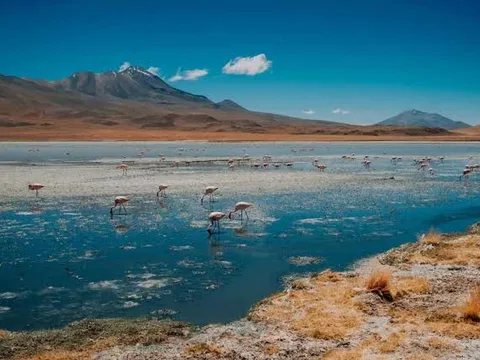
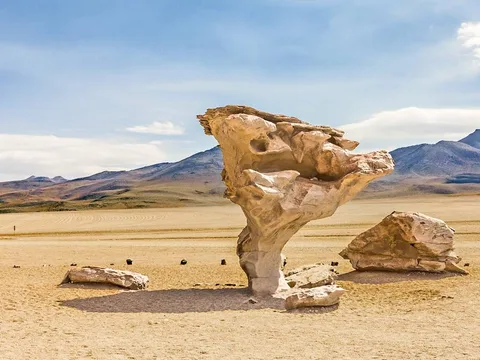
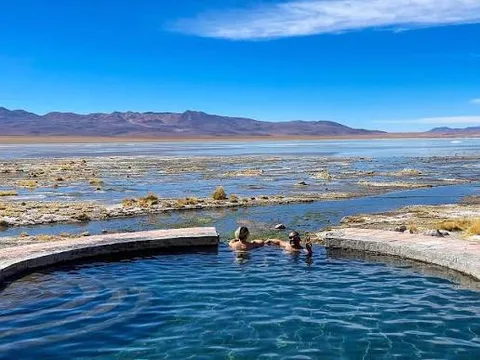
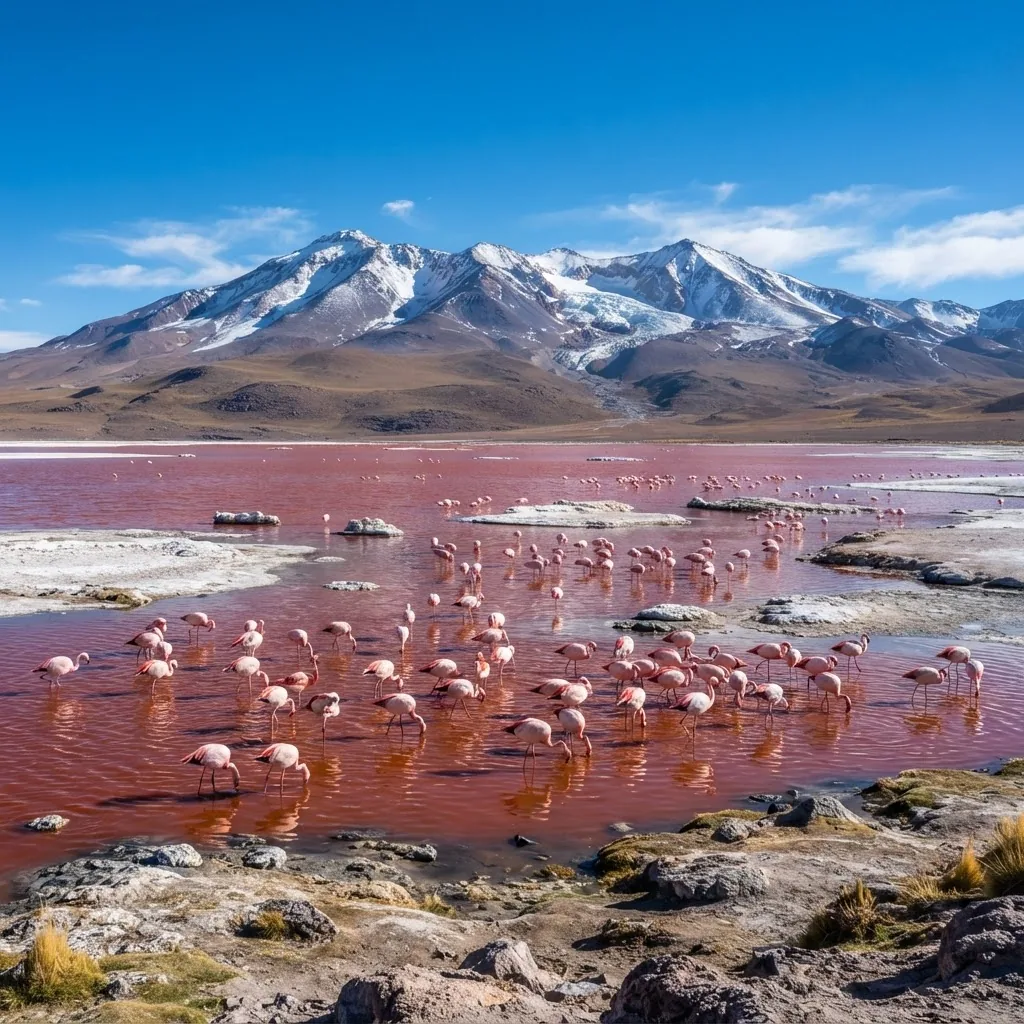
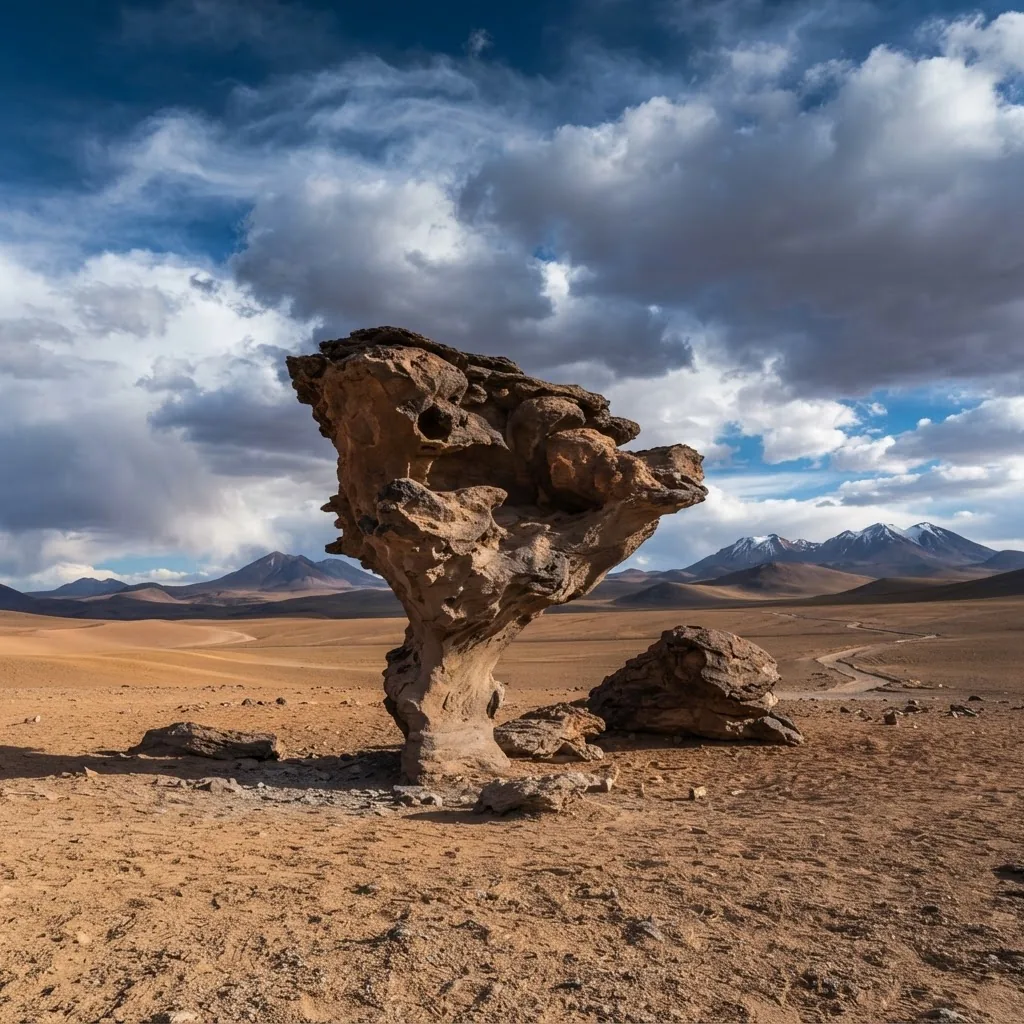
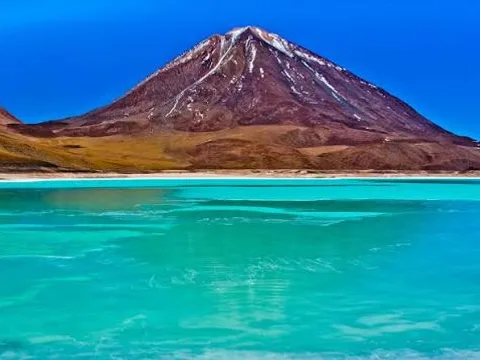
The 1-day tour stays on the salt flat itself: train cemetery, the salt-harvesting village of Colchani, Incahuasi Island and sunset on the crust. The 3-day tour does all of that on day one, then continues south into the Eduardo Avaroa reserve for the coloured lagoons, the Árbol de Piedra, the Sol de Mañana geysers and the Polques hot springs — scenery you cannot reach in a day. Take the 1-day if Uyuni is a stop on a longer route; take the 3-day if the south-west of Bolivia is why you came.
How much does a Salar de Uyuni tour cost?
The 1-day tour is $69 per person in a shared 4x4, or $390 for a private vehicle whatever the party size. The 3-day tour is $209 per person shared, or $1190 private. An English-speaking guide is an optional supplement (+$25 on the 1-day, +$50 on the 3-day, per person on shared departures). Prices are in US dollars and paid online by card. Park and entrance fees are the only extra, and they are paid on site in bolivianos.
What is not included, and how much cash should I bring?
Entrance fees are not included and are collected on site, in cash, in bolivianos: 30 BOB for Incahuasi Island on both tours, plus — on the 3-day — 150 BOB for the Eduardo Avaroa reserve and 30 BOB for the Polques hot springs. A sleeping bag rents for 120 BOB, rubber boots for 15 BOB at our office, and the bus on to San Pedro de Atacama costs 120 BOB. Bring roughly 100 BOB in cash for the 1-day tour and 350–500 BOB for the 3-day, plus anything you want to spend. There is no cash machine after Uyuni.
Is there an English-speaking guide?
Driver-guides speak Spanish by default — that is how tours out of Uyuni work, and it is why other operators quote a lower headline price. An English-speaking guide is available on every departure and on both tours, as an add-on you tick when booking. On a private vehicle the English guide is included in the private rate.
When can I see the mirror effect on the salt flats?
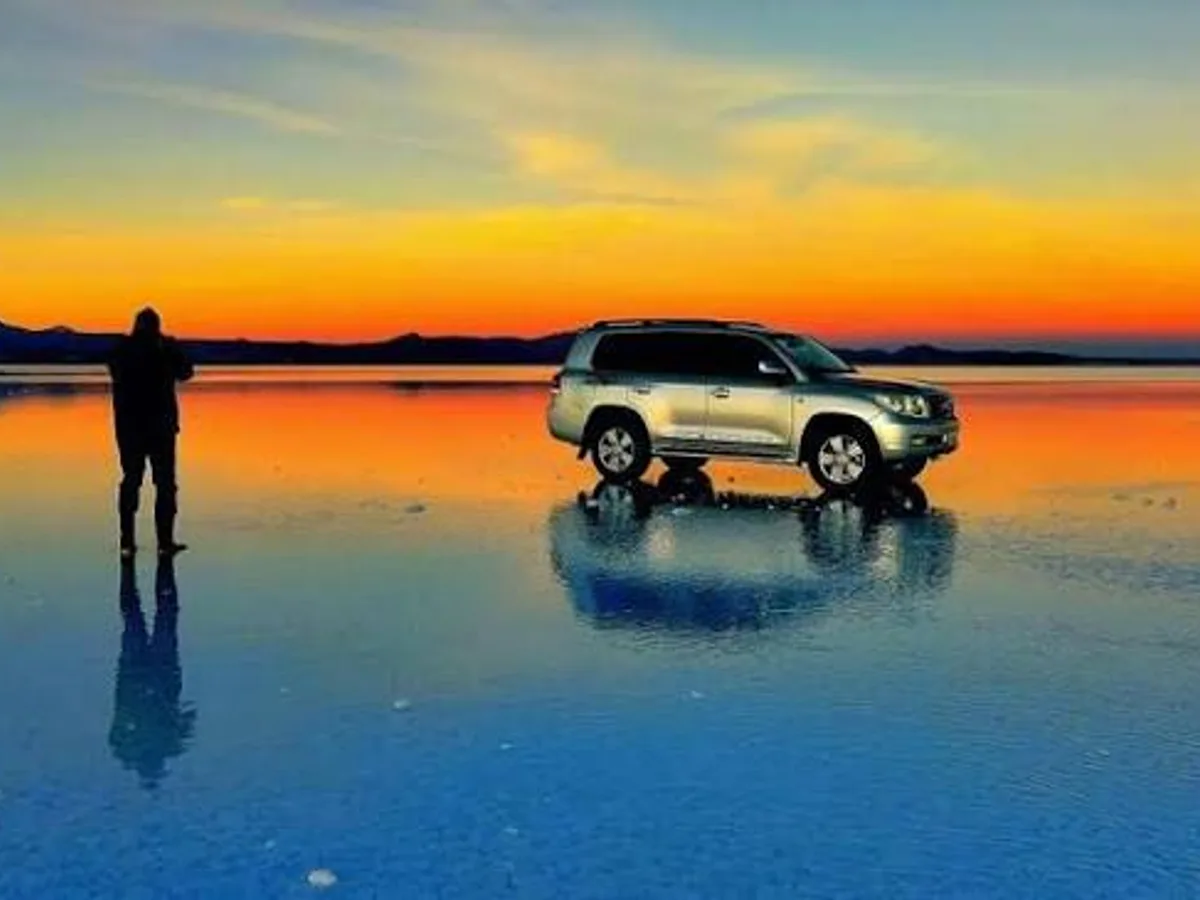
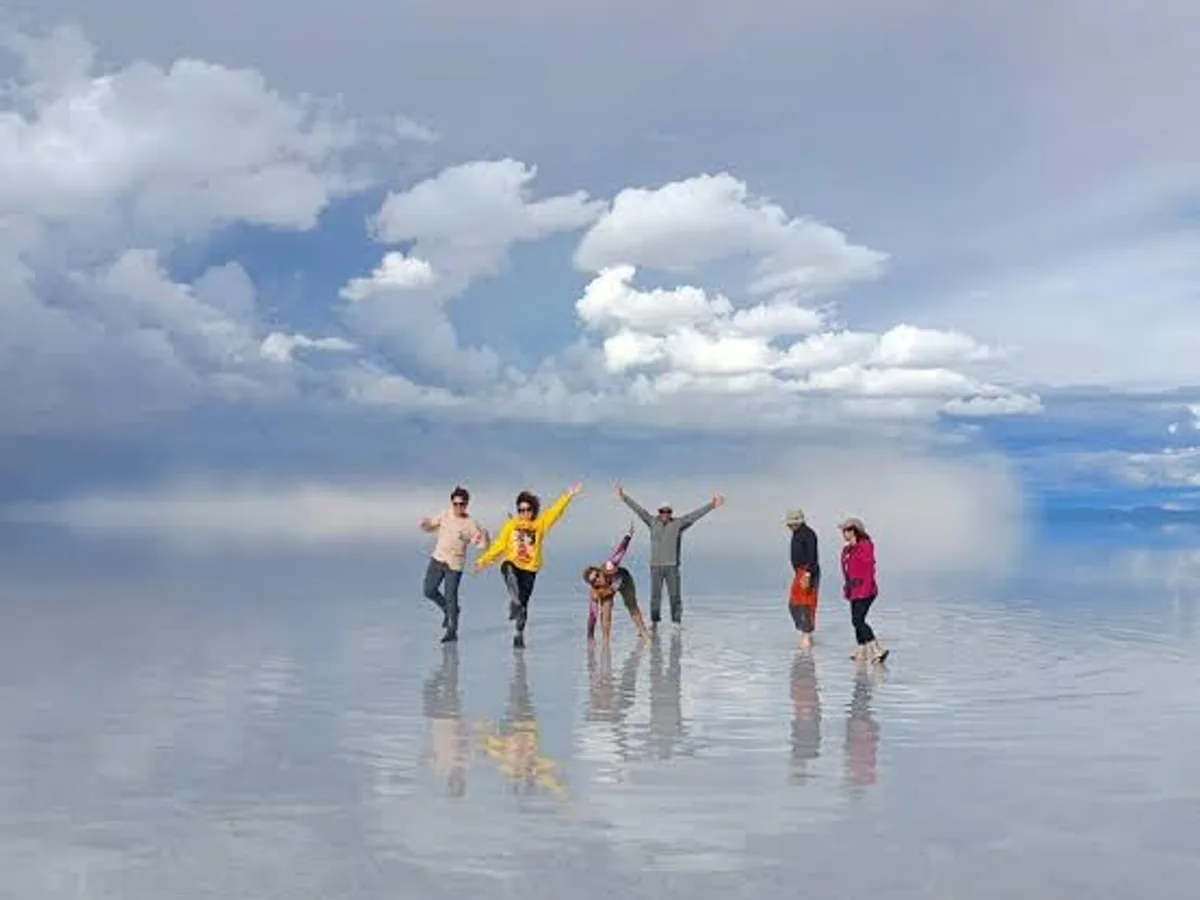
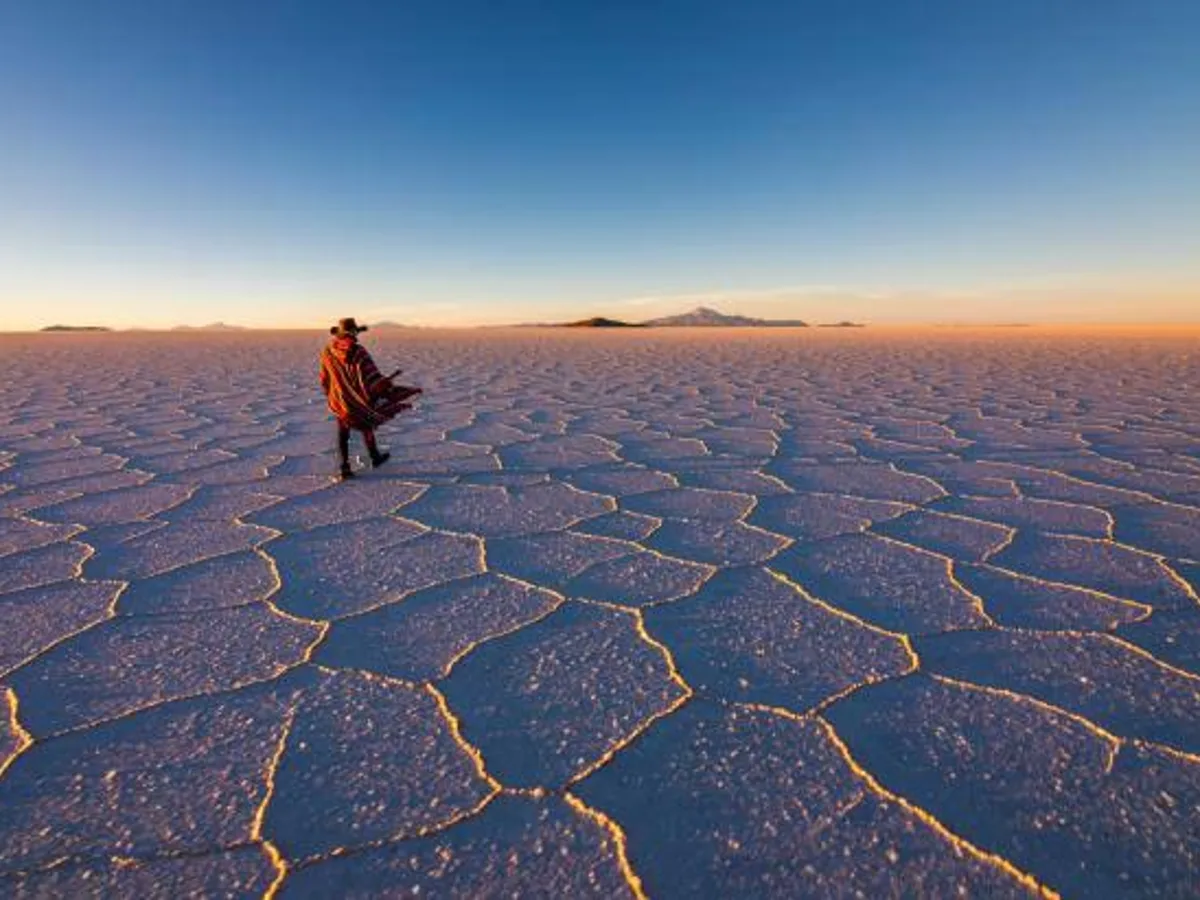
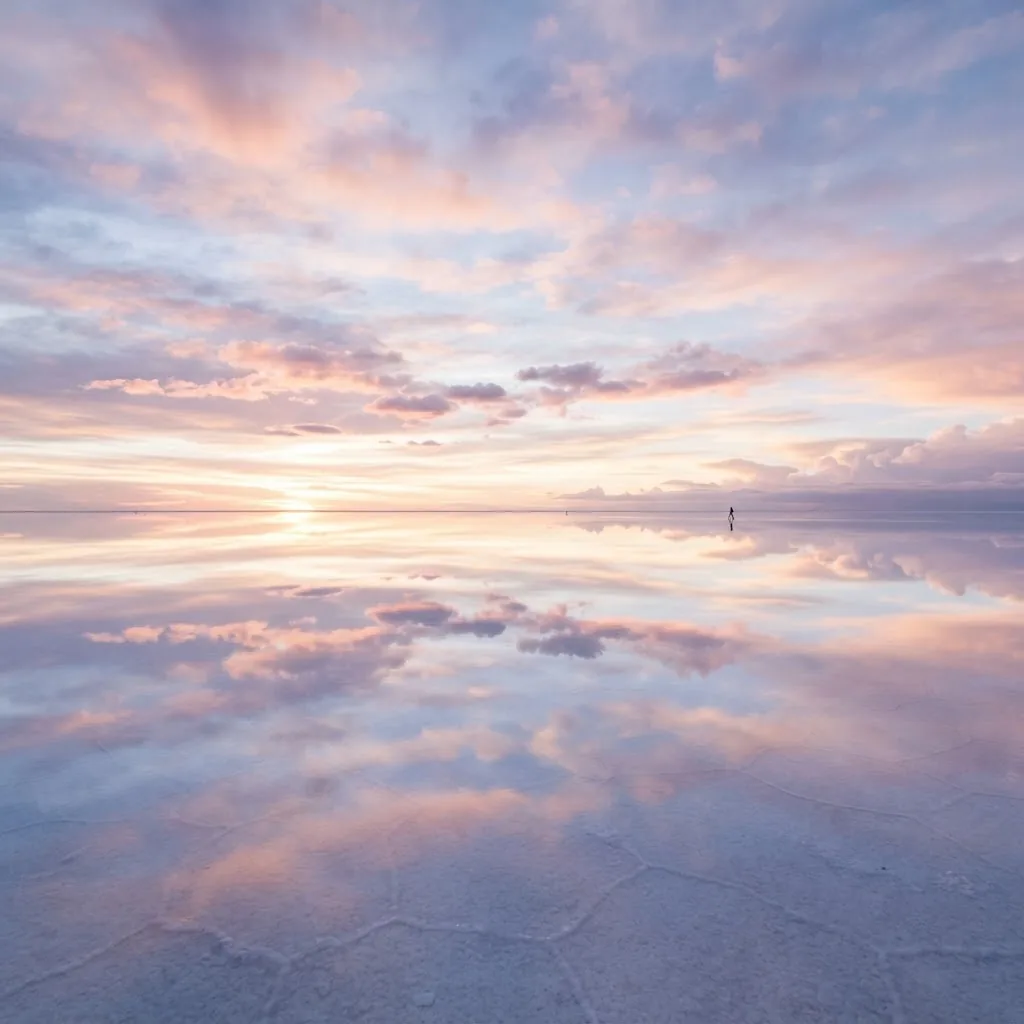
The reflections need a thin sheet of rainwater on the crust. The wet season runs from roughly November to April, but the water builds through it: January and February are the peak, December and March the shoulders. From May to October the salar is dry — no mirror, but hexagonal salt tiles in every direction and full access across the flat. The trade-off is real: when the water is deepest, Incahuasi Island can be unreachable.
How high is it, and will altitude be a problem?
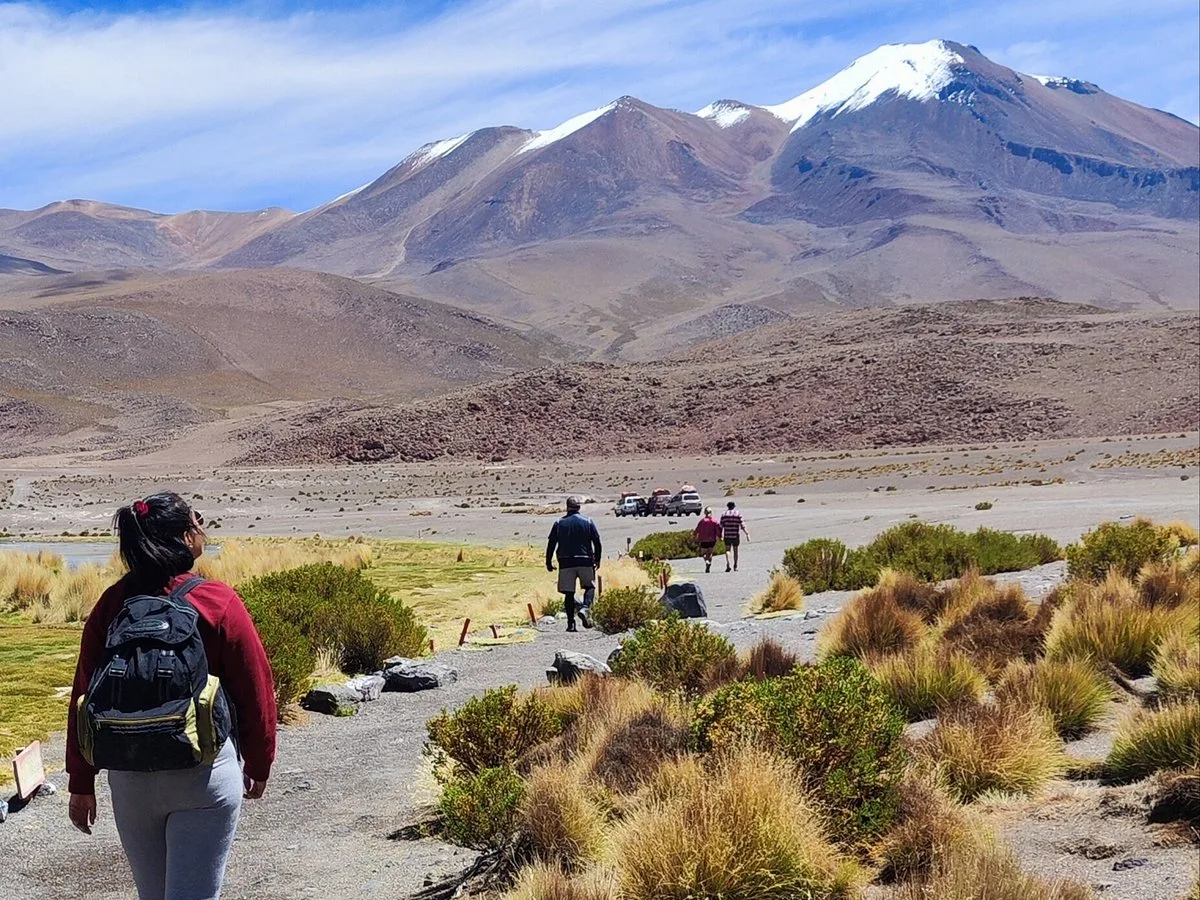
The salar sits at about 3,660 m. The 3-day route climbs higher still, sleeping near 4,200 m and crossing close to 5,000 m at the Sol de Mañana geysers. That is high enough for headaches and broken sleep in travellers who arrive straight from sea level. Spend at least one night in Uyuni, Potosí or La Paz before departure, drink far more water than feels necessary, and go easy on alcohol the day before.
Can the 3-day tour end in San Pedro de Atacama, Chile?
Yes. Instead of driving back to Uyuni on day three, you can be dropped at the Hito Cajón border post, where a bus continues to San Pedro de Atacama for 120 BOB, paid on the spot. Tell us when you book so the driver plans for it. Bring your passport and check Chilean entry rules — fresh food, coca leaves and some seeds are confiscated at the border.
Where do you sleep on the 3-day tour?
Night one is a salt hostel in the village of San Juan — walls, beds and floor built from blocks cut out of the salar. Night two is a shared mountain refuge in the Eduardo Avaroa reserve, six to a room, basic and cold. Both nights are included, along with every meal from day one. A private bathroom on night one can be arranged on request, and a sleeping bag rents for 120 BOB.
How do I get to Uyuni?
Most travellers arrive from La Paz on an overnight bus, roughly ten to twelve hours, or on the short domestic flight into Joya Andina airport. From Potosí it is a four-hour bus, and from Oruro there is the train. Tours leave Uyuni at 10:30, so an overnight bus arriving in the early morning connects the same day — but that is also the arrival that leaves you least acclimatised.
How do I book, and can I cancel?
Booking is entirely online: pick a date, choose shared or private, pay by card, and the seat is confirmed straight away — there is nothing to settle at an office in Uyuni. Cancel more than 48 hours before departure and the tour is refunded in full. Cancel within 48 hours and we keep 10% of the price. Cancel under 12 hours before departure, or fail to show up, and there is no refund. If we cancel, you are refunded in full.
Uyuni journal
All guides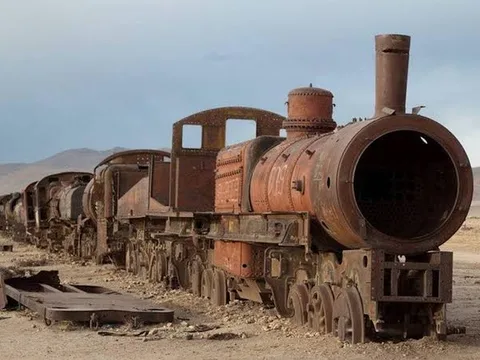
Getting there
How to get to Uyuni: from La Paz, Potosí, Sucre and Chile
Every route into the town the tours leave from — night bus, plane, train — and which one still lets you depart the same morning.
Routes
Uyuni to San Pedro de Atacama: crossing at the end of the 3-day tour
How the border transfer works, what it costs, what customs takes off you, and the altitude drop nobody warns you about.
Budget
What a Uyuni tour really costs: prices, park fees and cash
The advertised price, the fees that are never in it, and how many bolivianos to have in your pocket before you leave town.
Ready to cross the world’s largest mirror?
Secure your seat today — small groups, expert local guides, unforgettable landscapes.
From
$69per person