Routes
Bolivia itinerary: 2 weeks via Sucre, Potosí, Uyuni, La Paz
· 7 min read
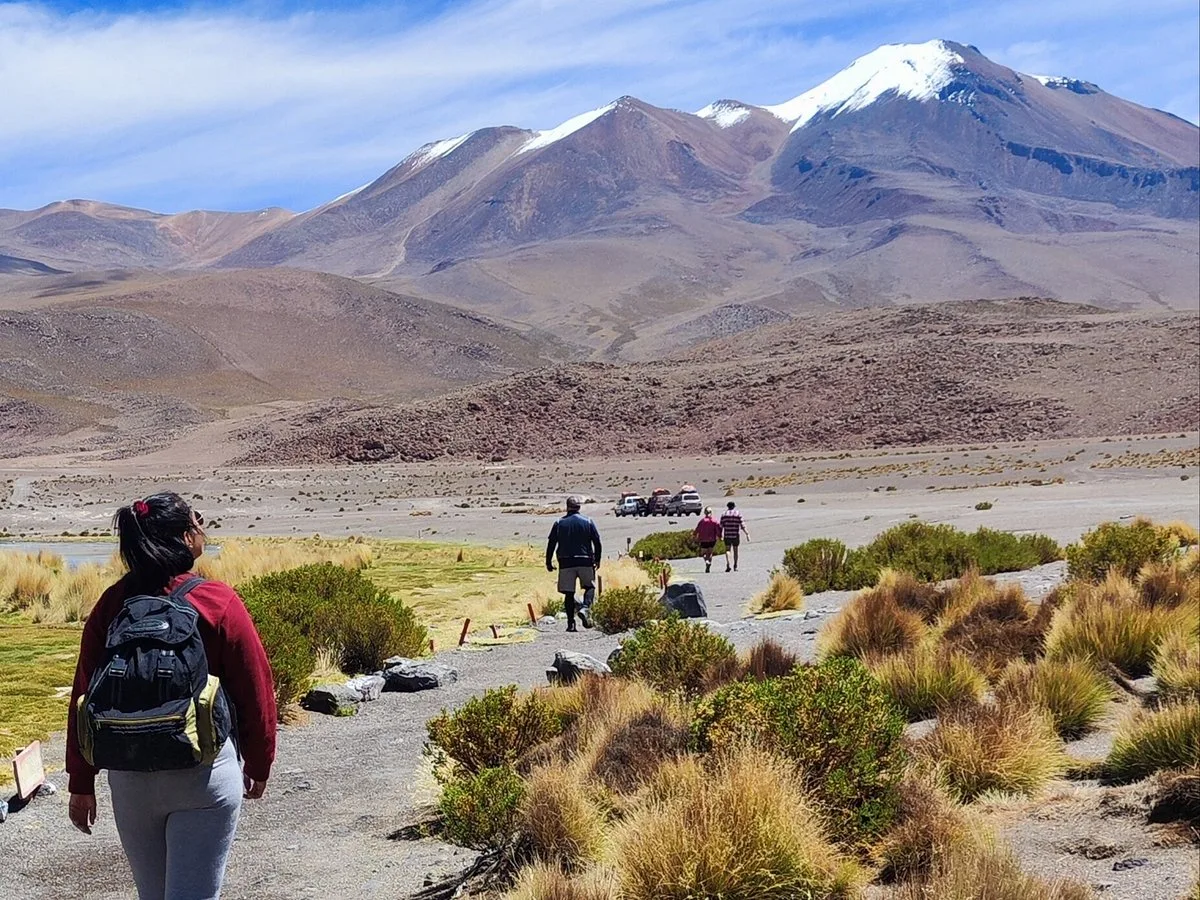
Two weeks covers Bolivia’s classic highland loop: Sucre, Potosí, the Uyuni salt flats, La Paz and Lake Titicaca. Start low in Sucre, at about 2,800 m, and climb gradually; give the Uyuni lagoons the full three days; and keep two spare days for the buses, flights and road blockades that reshuffle every Bolivian plan.
The route at a glance
| Days | Where | Altitude | Getting there |
|---|---|---|---|
| 1–2 | Sucre | ≈ 2,800 m | Domestic flight via Santa Cruz or La Paz |
| 3–4 | Potosí | ≈ 4,070 m | Bus from Sucre, about 3 hours |
| 5 | Uyuni | ≈ 3,670 m | Bus from Potosí, about 4 hours |
| 6–8 | Salt flats, lagoons and geysers | 3,656 m to ≈ 5,000 m | 3-day 4x4 tour from Uyuni, 10:30 |
| 9–11 | La Paz | ≈ 3,640 m | Night bus from Uyuni (10 to 12 hours) or a flight of under an hour |
| 12–13 | Copacabana and Isla del Sol | 3,812 m (the lake) | Bus from La Paz, 3.5 to 4 hours with the Tiquina crossing |
| 14 | La Paz, flight home | El Alto airport ≈ 4,060 m | Bus back from Copacabana |
The route runs south to north on purpose. Most international flights into Bolivia land at Santa Cruz, in the lowlands, or at El Alto above La Paz, which at about 4,060 m is one of the highest international airports in the world. Starting in Sucre and finishing in La Paz means you sleep a little higher every few days instead of landing at 4,000 m on the first night.
Why start in Sucre rather than La Paz?
Because of how altitude works. The US Centers for Disease Control advise against going from low altitude to a sleeping altitude above 2,750 m in a single day, and, once above 3,000 m, against raising your sleeping altitude by more than 500 m a day. Landing at El Alto and sleeping in La Paz at 3,640 m on night one breaks the first rule by a wide margin, and it is how many Bolivian trips begin with two days of headaches. Sucre, at about 2,800 m, sits right at that threshold: the gentlest first night the highlands offer.
The step up to Potosí is bigger than the 500 m guideline, so take the first day there slowly. It pays off later: after two nights above 4,000 m, Uyuni feels easy and the 3-day tour, which climbs close to 5,000 m, is far less of a shock. Our altitude guide covers the symptoms worth watching.
Sucre or Potosí before Uyuni?
Both, in that order, if you have two weeks. If you only have time for one, choose by what you need. Potosí is about four hours from Uyuni by bus and, at around 4,070 m, the best rehearsal for the altitude of the 3-day tour. Sucre is eight to nine hours away, usually overnight with a change in Potosí, but lower, warmer and more comfortable as a first stop. The full list of routes into town is in how to get to Uyuni.
Days 1 and 2: Sucre
Bolivia’s constitutional capital is a compact colonial city of white façades, listed by UNESCO in 1991. It has the mildest climate on this route, with average afternoon highs around 22 °C, which makes it the right place to arrive tired, sleep badly once and recover. Spend the time on foot in the centre and its museums, and let the altitude settle.
Days 3 and 4: Potosí
About three hours by bus from Sucre, Potosí sits at around 4,070 m below Cerro Rico, the 4,824 m mountain whose silver was mined from the 16th century onwards and helped finance the Spanish empire. The city was listed by UNESCO in 1987 and has been on the list of World Heritage in Danger since 2014. The Casa Nacional de Moneda, the old royal mint, is the visit to make if you only make one.
Visits to the working cooperative mines inside Cerro Rico are sold all over town. They are real mines, with dust, heat, low tunnels and safety conditions far from anything you would accept at home. Skip them if you are claustrophobic, asthmatic or still struggling with the altitude, and never book one for the afternoon you arrive.
Day 5: Potosí to Uyuni
The bus takes about four hours and there are several departures a day, including morning ones, so you reach Uyuni by mid-afternoon with time to buy water, snacks and the cash you need for park fees: there is no cash machine once the tour leaves town. Tours depart at 10:30 the next morning. If you want the train cemetery at sunset without the crowds, it is 3 km from the centre.
Days 6 to 8: the salt flats and the lagoons
This is the reason for the whole southern half of the route. The 3-day tour spends day one on the salt flat, with the train cemetery, Colchani, Incahuasi Island and sunset, and sleeps in a salt hotel in Colcha K. Day two heads south past the flamingo lagoons into the Eduardo Avaroa reserve, with the Árbol de Piedra and Laguna Colorada, ending at the Polques hot springs. Day three takes in the Dalí desert and Laguna Verde before the drive back to Uyuni, around 18:00.
In 2026 the shared tour costs $239 per person with all meals and two nights included, and $269 from 1 January 2027. Bring 350 to 500 BOB in cash for the entrance fees and extras. If you are short of time, the 1-day tour covers the salt flat alone, and 1 day or 3 days helps you choose. Once your dates are fixed, you can book online.
Days 9 to 11: La Paz
From Uyuni, take the night bus, ten to twelve hours, or the flight of just under an hour. La Paz fills a deep canyon at around 3,640 m, with El Alto spread across the rim above, and the two are linked by a network of urban cable cars; riding them is the quickest way to understand the city. Use the days for markets and museums, and if you want one excursion, the pre-Inca site of Tiwanaku makes an easy day trip.
Days 12 and 13: Lake Titicaca
Buses to Copacabana take about three and a half to four hours. Partway, at the Strait of Tiquina, passengers cross on a small boat while the bus goes over on a separate barge. From Copacabana, boats run to Isla del Sol, an island with no cars or paved roads, terraced hillsides and Inca-era ruins; a night on the island is worth more than a day trip. The lake lies at 3,812 m, which after Uyuni will feel familiar.
Day 14, and the two days you should not plan
Back to La Paz in the morning and out through El Alto. Whatever you do, leave slack in the plan. UK government travel advice warns that protest groups in Bolivia often block roads without warning and that travellers should not try to cross blockades. A blockade can hold up buses for a day or more, and highland flights can be cancelled in bad weather. Two unplanned days in a fortnight are not a luxury; they are what keeps the rest of the trip intact.
Ending in Chile instead
If your trip continues to Chile, turn the loop around: La Paz and Titicaca first, then south through Sucre and Potosí, finishing with the 3-day tour, which can drop you at the Hito Cajón border on the last morning for the 09:00 connection to San Pedro de Atacama (bus ticket 200 BOB, not included). The San Pedro crossing guide has the details. You lose the gentle start in Sucre, so make your first day in La Paz a quiet one.
If you only have 10 days
Drop Lake Titicaca, or fold Sucre and Potosí into two days, but keep the three days in the south-west: the lagoons are what most people remember. If even that is too much, the 1-day tour gives you the salt flat itself, from the 10:30 departure to sunset.
Frequently asked questions
- Is two weeks enough for Bolivia?
- For the highlands, yes. Two weeks covers Sucre, Potosí, the Uyuni salt flats and lagoons, La Paz and Lake Titicaca at a reasonable pace, with two days spare. The Amazon lowlands or the Yungas valleys would need extra time.
- Should I go to Sucre or Potosí before Uyuni?
- Both if you can, Sucre first. If you must choose, Potosí is about four hours from Uyuni and, at around 4,070 m, the better preparation for the altitude of the 3-day tour. Sucre is lower and more comfortable but eight to nine hours away by bus.
- Which direction is best for a Bolivia itinerary?
- South to north, starting in Sucre at about 2,800 m and finishing in La Paz, if your flights allow it. You gain altitude gradually instead of sleeping at 3,640 m on the first night after landing at El Alto.
- How do you get from Potosí to Uyuni?
- By bus, in about four hours. There are several departures a day, including morning ones, so you can arrive the afternoon before a 10:30 tour departure.
- How many days do you need for Uyuni?
- Three days for the salt flat plus the lagoons and geysers of the south-west, or one day for the salt flat alone. Add a night in Uyuni before either tour, to acclimatise and to absorb any delay on the way in.