Getting there
How to get to Uyuni: from La Paz, Potosí, Sucre and Chile
· 7 min read
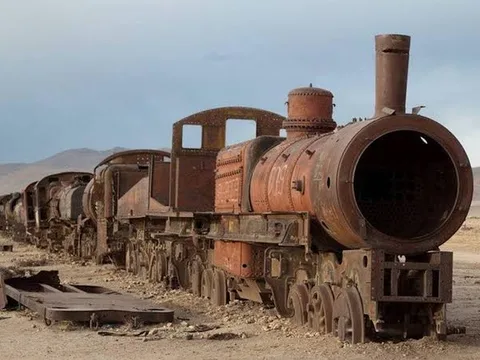
Uyuni is a small town on the altiplano at about 3,670 m, and it exists, as far as travellers are concerned, because the salt flat starts twenty minutes away. Nothing flies in from abroad. Every arrival is a domestic connection, and the one you choose decides whether you leave on a tour the same morning or lose a day.
Our tours leave Uyuni at 10:30. Any arrival before roughly 09:30 connects the same day; anything later means a night in town.
From La Paz — the night bus
This is how most travellers arrive. Buses leave La Paz in the evening, usually between 20:00 and 21:30, and pull into Uyuni between 06:00 and 08:00 — ten to twelve hours, most of it asleep. Tourist-class operators such as Todo Turismo run heated coaches with fully reclining beds and a meal; the local companies at the Villa Fátima terminal cost a fraction of that and are exactly as comfortable as the price suggests.
The road is paved the whole way now, which was not true a decade ago and still surprises people who read old advice. Take the warmest layer you own into the cabin: the altiplano at 3 a.m. is around freezing and the heating is a rumour on the cheaper coaches.
From La Paz — the flight
Boliviana de Aviación flies La Paz to Uyuni’s Joya Andina airport in a little under an hour. It is the fastest way in by a wide margin, and it costs what a short domestic hop costs. Two caveats: the schedule is thin and seasonal, so check it before building a plan around it, and the airport sits a few kilometres out of town — a taxi takes ten minutes.
From Potosí, Sucre and Oruro
- Potosí — about four hours by bus, several departures a day, including morning ones. The most comfortable overland approach if you are already in the highlands.
- Sucre — eight to nine hours, usually overnight, often with a change in Potosí.
- Oruro — the train. The Expreso del Sur and the Wara Wara del Sur run the line a few days a week and take roughly seven hours. It is slower than the bus and far more pleasant, and it is the only arrival that is itself worth doing.
From Chile and Argentina
From San Pedro de Atacama, the elegant answer is to do our three-day circuit in reverse — you cross the border at Hito Cajón and arrive in Uyuni having already seen the lagoons, rather than backtracking. The alternative is the bus via Calama and Oruro, which takes the better part of two days. From Argentina, cross at La Quiaca / Villazón and take the bus or train north.
The altitude question nobody asks in time
La Paz sits at roughly 3,640 m and Uyuni at 3,670 m, so travelling between them changes nothing. Arriving from Santa Cruz, Lima or Buenos Aires does: those are near sea level, and a night bus does not count as acclimatisation. If your route jumps straight from the lowlands, give yourself a night in Uyuni before departure — it is the cheapest insurance you will buy on this trip.
| From | How | Time | Same-day tour? |
|---|---|---|---|
| La Paz | Night bus | 10–12 h | Yes |
| La Paz | Flight | ≈ 1 h | Depends on the schedule |
| Potosí | Bus | ≈ 4 h | Yes, on an early departure |
| Sucre | Night bus | 8–9 h | Yes |
| Oruro | Train | ≈ 7 h | Only on certain days |
Frequently asked questions
- Can I book a tour for the morning my night bus arrives?
- Yes. Buses from La Paz reach Uyuni between 06:00 and 08:00 and the tour leaves at 10:30, so there is time for breakfast and a shower. Leave a margin if it is your only day: highland buses run late often enough to matter.
- Is there an airport in Uyuni?
- Yes — Joya Andina, a few kilometres outside town, served by domestic flights from La Paz. There are no international flights; every route in goes through another Bolivian city first.
- Do I need to book the bus in advance?
- In the dry season, and around Bolivian public holidays, the tourist-class coaches sell out days ahead. Outside those periods a seat is usually available the same afternoon. The local companies rarely sell out, for reasons you will understand once aboard.